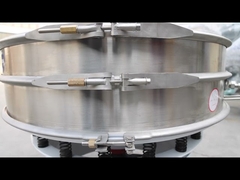
Transportador al vacío para el transporte de óxido de zinc: libre de polvo, sellado y de alta eficiencia

真空上料机
August 13, 2025
Categoría Conexión: sistemas de transportador del vacío
Escrito: Descubra los sistemas de transporte de vacío de bajo consumo de energía para el transporte de material libre de polvo.y transferencia libre de contaminaciónPerfecto para industrias con estrictos requisitos de limpieza y eficiencia.
Características De Productos Relacionados:
  • Enables efficient, continuous material transport without downtime, enhancing production line throughput.
  • Features a fully enclosed structure to prevent dust spillage and protect materials from moisture and impurities.
  • Offers high automation for easy operation, reducing manual labor and simplifying maintenance.
  • Adapts to various material characteristics like powders and granules with adjustable parameters.
  • Consumes less energy than traditional mechanical conveying systems for cost savings.
  • Allows flexible pipeline routing to optimize factory space and accommodate complex layouts.
  • Ensures safety by minimizing hazards associated with dust-laden materials in industrial settings.
  • Supports a wide range of applications in food, chemical, and pharmaceutical industries for clean transport.
Las preguntas:
  • What types of materials can this vacuum conveyor handle?
    It is designed for powdery and granular materials such as raw pharmaceutical powders, chemical powders, and metal oxide powders like zinc oxide. However, it is not suitable for overly moist, sticky, or heavy materials.
  • How does the vacuum conveyor achieve dust-free transportation?
    The system operates with a fully enclosed structure, using a vacuum pump to create negative pressure. This prevents dust from escaping during transport, ensuring a clean and contamination-free process.
  • Is the conveyor system energy-efficient?
    Yes, it consumes less energy compared to traditional mechanical conveying methods, thanks to its optimized vacuum-based operation and low energy consumption design.
  • Can the conveying capacity be adjusted for different production needs?
    Absolutely. Parameters can be adjusted based on material characteristics, and the system offers a range of models with conveying capacities from 50 kg/h to 6000 kg/h to suit various production scales.